


August 19 marks the beginning of a three-game ODI series between Australia and South Africa to be played in Cairns and Mackay. Recently, Australia secured a close T20 International series victory over South Africa.
However, Australia has not played an ODI since they were knocked out of the 2025 ICC Champions Trophy by India in March.
Since then, core players Steve Smith and Glenn Maxwell have retired from the format, leaving Australia in a transitional period.
Beyond retirements, there are significant changes to the squad taking on South Africa compared to the Champions Trophy team.
Jake Fraser-McGurk, Sean Abbott and Tanveer Sangha have been dropped.
Spencer Johnson, Matt Short and Lance Morris are injured, whilst Aaron Hardie, Cooper Connolly and Matt Kuhnemann have been called into the squad in their absence.
Big Bash star Mitch Owen was initially selected for this series but will miss out due to a concussion.
Test players Josh Hazlewood and Cameron Green return to the fold. Meanwhile, with captain Pat Cummins rested, Mitch Marsh will lead the side after being unavailable throughout the Champions Trophy.
With all this change surrounding the Australian side, who are the players to look out for in this series?
Marnus Labuschagne
Labuschagne has not played for Australia since his axing from the Test team before Australia's 2025 Caribbean tour.
He has shown a tendency to deliver against South Africa in the 50-over format. Both of his ODI centuries have been against South Africa, and he averages 55.11 when playing the Proteas. That's the highest batting average against South Africa of any Australian in the squad.
Smith's retirement leaves a gap in Australia's top order. Australian cricket fans know what Labuschagne is capable of when he is at his best and will be hoping he can contribute to the ODI side.
Whilst white-ball performances aren't a major factor in Test selection, a good series could give Labuschagne momentum heading into the start of the Sheffield Shield season and improve his chances of a return to the Test team this summer.
Mitch Marsh
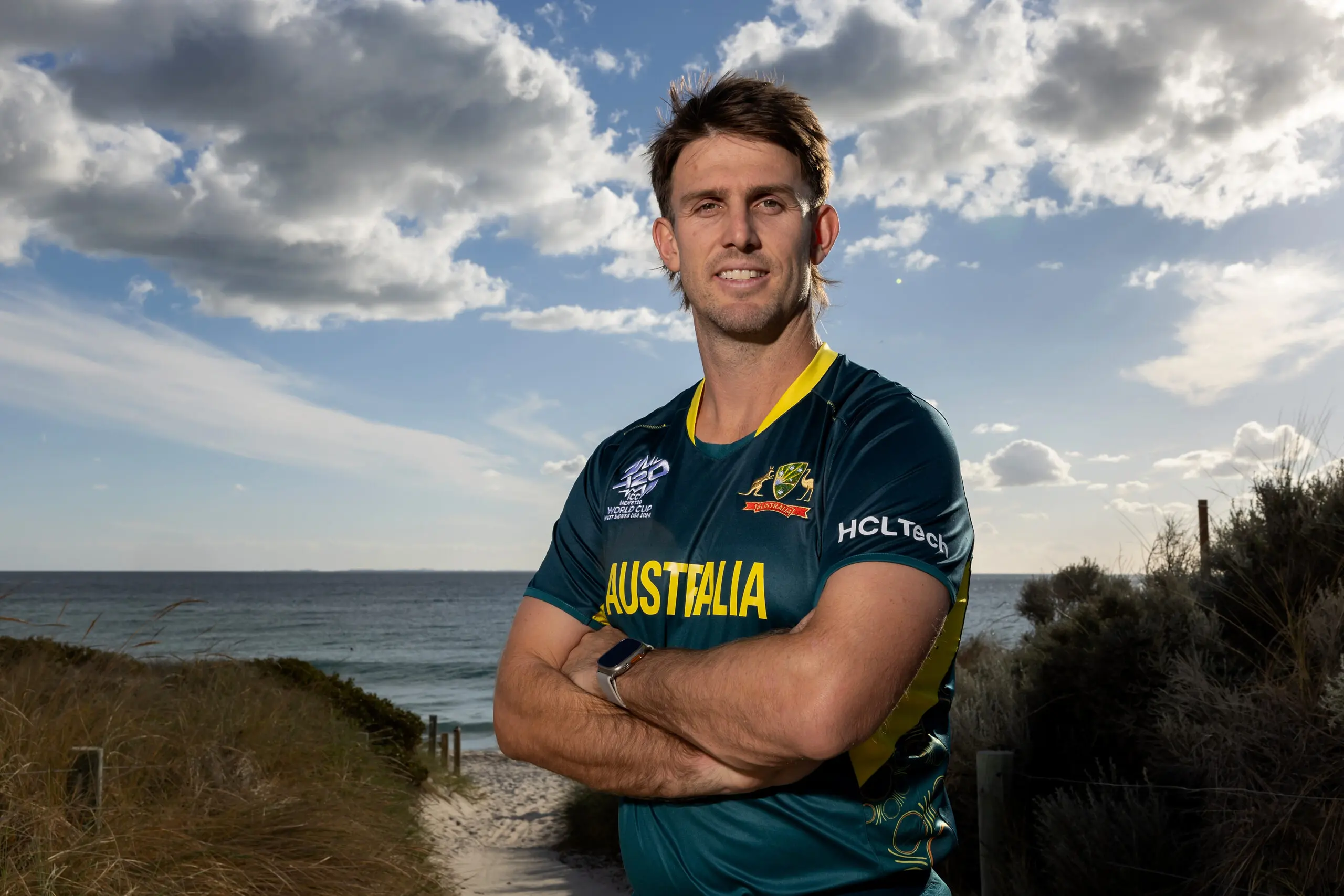
Marsh is no stranger to leading Australia in the shorter formats. He captains the T20 side full-time and has had short stints captaining the ODI side when Cummins has been unavailable.
Cummins' absence from the ODI team has been increasingly common since the successful 2023 World Cup campaign, playing just two of Australia's last 17 ODIs.
Marsh has recently suffered some lean form in recent T20s against the West Indies and South Africa, but did manage a half-century in the final T20I against South Africa.
Earlier this year, Marsh had a successful IPL campaign, and he has been a clutch player for Australia's white-ball sides in recent years.
The North Queensland dew will create challenging conditions after dark and poses a unique tactical captaincy challenge for Marsh this series.
A strong leadership performance and handy batting outings could make Marsh a candidate for full-time ODI captaincy.
Josh Inglis/ Alex Carey
Josh Inglis has been Australia's first-choice wicket-keeper in ODIs and T20S after Carey was dropped at the beginning of the 2023 World Cup campaign.
But an injury to Inglis saw Carey (Australia's Test 'keeper) return to the team in September last year. Solid performances ensured his continued inclusion throughout the Champions Trophy campaign, not as a wicket-keeper but as a batter.
In the short term, selector George Bailey has made it clear that Inglis will wicket-keep. If both Carey and Inglis are to be selected in a white-ball game, Carey will be in the team as a batter.
"I don't mind running around in the field and getting some Ks into the legs", Carey said to cricket.com.au.
"I was out of the team for a little while post World Cup, and to be able to get back in and play some cricket in the white-ball format, it's been great. Happy to play whatever the role."
Whilst the arrangement is clear for now, Carey did not want to rule out returning to wicket-keeping for the white-ball teams in the longer term.
Given both players' proven quality behind the stumps, if either player fails with the bat, one may prevail over the other in the longer term.
Nathan Ellis

Hazlewood, Starc and Cummins have long been locks in Australia's three-pronged pace attack across all three formats.
Whilst Scott Boland furthers his case for selection in the Test side, Nathan Ellis could disrupt the "big three" in the white-ball formats.
Ellis is the only fast-bowler on a Cricket Australia contract who specialises in white-ball cricket.
He is noticeably shorter than Starc, Hazlewood and Cummins, meaning at first look he may not be ideally suited to fast bowling.
Rather, his short stature is precisely what makes him a viable alternative. His lower release point means it is more difficult for batters to get underneath his deliveries and send the ball to the boundary.
Ellis' T20 form has been particularly strong; against the West Indies, he had the best Australian economy rate by some margin. Since the start of 2024, he has conceded an average of just 6.85 runs per over.
With Hazlewood the only "big three" quick in the squad for the upcoming ODIs, Ellis will surely get a solid crack and make his case for further selection, regardless of whether Cummins and Starc are also available.
Furthermore, by the time the next Cricket World Cup rolls around, it is possible that members of Australia's vaunted bowling attack may have retired from ODIs. In 2027, Starc will be 37 and Hazlewood, 36.
Ellis is undoubtedly a crucial part of Australia's white-ball future.
The series against South Africa will begin in Cairns on August 19 before moving to Mackay for the second and third games on August 22 and 24.