






Australia cruised to a five-wicket victory in Sydney last week to complete their fourth successive Ashes series victory on home soil.
But with the current preferred XI beginning to age, the retirement of Usman Khawaja and some impressive performances from Sheffield Shield bolters, the XI for the first Test at Edgbaston in 2027 could prove vastly different to the one fielded at the SCG.
Here we look at what Australia's XI could look like...
1. Travis Head
Following the recent retirements of stalwarts David Warner and Usman Khawaja, it appeared Australia had a serious conundrum at the top of the order. But Travis Head has solved half of that problem in just a handful of innings by opening the batting.
The dynamic left-hander has proven himself at number five, but it seemed unlikely just a few months ago that he would ever be a long-term opener at Test level. 629 runs @62.9 was an incredible return in the most recent Ashes, and it would be near impossible for selectors to shift him back to number five. His ability to take the game away from the opposition in just a matter of overs is unparalleled and a serious point of difference for the Aussies.
2. Campbell Kellaway/Matt Renshaw
There is plenty of conjecture around who will join Head at the top of the order, not only for Australia's tour of the UK next year but also the upcoming test series in South Africa in September. After Jake Weatherald failed to capitalise on his opportunity, two potential options present in Campbell Kellaway and Matthew Renshaw.
Kellaway looks a Test cricketer in the making. A sound technique and a nice temperament, he featured for Australia A late last year, indicating he will be in the frame at some point. Although averaging just a tick under 33 at first-class level, it has been recent performances that have seen him skyrocket into contention. He cracked 147 in the opening round of the Sheffield Shield this season, an unbeaten 165 late last season and scored a pair of half-centuries against the England Lions earlier this summer. Has been endorsed by champion batsman Ricky Ponting as Australia's next opener.
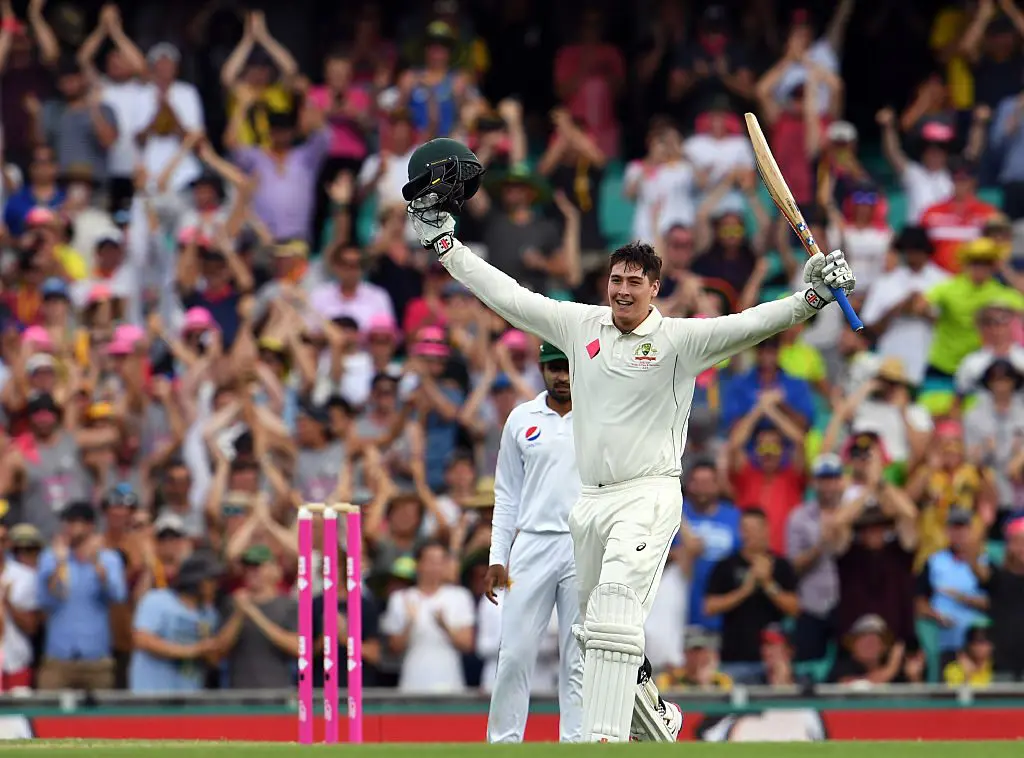
Left-handed Queenslander Matthew Renshaw is another the selectors may look to. After bursting onto the Test scene as a 20-year-old when he scored 184 at the SCG against Pakistan, Renshaw has found himself in the cricketing wilderness at times in recent years but now appears primed to return to Test level. At 29, he is now a hardened first-class cricketer with 131 matches under his belt. He has scored 425 Shield runs @70.8 this season.
Verdict: Kellaway
3. Marnus Labuschagne/Nathan McSweeney
Three years ago, it looked as if Australia had all but found a long-term number three in Labuschagne. But a considerable dip in output has meant his position in the team has come under considerable scrutiny.
It seemed as if Labuschagne had returned to form before the Ashes with five hundreds in eight innings for Queensland in various formats, but 259 runs @28.8 in the Ashes was hardly the output selectors were looking for. With plenty of cricket to be played before the next Ashes, he may well lock away his position at number three. But for now, he is no certainty.
Nathan McSweeney is an interesting proposition. Thrust into open against a rampaging Jasprit Bumrah last summer after batting at number three for South Australia, you get the feeling he was almost set up to fail. He has been among the leading Sheffield Shield run-scorers across the past three seasons, while a mammoth 226* for Australia A last month confirmed he remains one of Australia's brightest Test batting prospects.
Verdict: Labuschagne
4. Steve Smith
The 36-year-old, who is statistically Australia's best Test Batsman since Sir Donald Bradman, is back to his fidgety best after a lean period by his lofty standards between 2023 and 2024. In 2025, he scored 651 runs at an average of 50.1 to prove he is still clearly Australia's best option at number four.
Smith played four of the five Ashes Tests, missing in Adelaide due to illness. He registered 286 runs @57.2 for the series, culminating in a patient 138 at the SCG.
He has recently indicated he has no immediate plans to retire from Test cricket and will almost certainly play in the first Test at Edgbaston.
5. Oliver Peake
The number five position is certainly there for the taking after Travis Head's move up the order. There is no obvious candidate, with the selectors potentially moving past Josh Inglis after his disappointing Ashes series.
If George Bailey and his team look to youth, Victorian left-hander Oliver Peake is a talented 19-year-old who has been backed by Australian great Ricky Ponting to feature in Australia's next Ashes team. Peake burst onto the scene last year when he joined the Australian squad on their tour to Sri Lanka as a development player. He was then selected for Australia A in July after playing just one first-class match, compiling an impressive 92.
If he was to be picked, it would be a similar call to the Poms' inspired selection of 22-year-old Jacob Bethell. The youngster came down under without a first-class hundred, but justified the selectors' faith with a composed 154 in the second innings in Sydney. Peake will captain the Australian Under-19 team at the World Cup later this month.
6. Beau Webster/Cam Green
The all-rounder position is being hotly contested by Cam Green and Beau Webster. Selectors have shown their cards, selecting Green at every possible opportunity despite the rollercoaster start to his Test career.
Many were left wondering what more Beau Webster could have done to be picked in the first four Ashes Tests before he was finally given an opportunity in Sydney alongside Green. He again demonstrated he is more than ready to hold down the all-rounder position in Australia's XI, scoring 71* in the first dig and taking 3/64 in the second innings with his off-breaks.
Cameron Green probably has the higher ceiling as a cricketer, but right now he simply isn't delivering on his undeniable potential. With plenty of cricket to play out before the first Test at Edgbaston, the battle for the all-rounder position looms as an intriguing watch.
Verdict: Green
7. Alex Carey
At 34, Carey still has plenty of good cricket left in him. Although named at seven here, he could well bat at six for the remainder of his Test career such is his ability with the bat. His career batting average of 35.9 is the best for an Australian wicketkeeper since Adam Gilchrist.
His extraordinary ability to rescue Australia from precarious positions with the bat was on show again in the third Test at Adelaide. Carey scored a first innings 106 after Australia fell to 4/94 just after lunch, guiding them to a first innings total of 371. His glove-work is arguably the best in the world, with his ability to keep up to the stumps to the quicks proving a serious weapon for the Aussies.
He enjoyed a dominant Ashes series, recording 28 dismissals and 323 runs @46.1.
8. Mitchell Starc
Man of the Series in the recent Ashes, 35-year-old Starc is showing no sign of slowing down after enjoying a career-best year.
The left-arm quick snared 55 wickets @17.3 in 2025, still regularly operating above the 140 km/h mark. His ability to swing the ball remains a weapon, but it is his scrambled seam delivery that has made him arguably even more dangerous in the twilight of his career.
His form with the bat has been impressive as well, scoring 284 runs @23.7 in 2025, including three half-centuries. Lock him in to play a huge role in the 2027 Ashes.
9. Pat Cummins (C)
Since re-entering the Test arena in 2017 following a long injury layoff, Cummins has been an incredible model of consistency. Across 72 Tests he has claimed 315 wickets at an incredible average of 22, while also making some valuable contributions with the bat.
He has battled injury this summer, but remains Australia's most dangerous bowler when fit. He reminded fans of his class as he returned to the team in Adelaide under an injury cloud for his sole Test of the summer. He collected three important wickets in each innings, with his relentless line and length doing the damage.
Barring injury, Cummins will be tossing the coin on the first morning at Edgbaston.
10. Josh Hazlewood
The 35-year-old seamer has struggled with injury at times as he enters the latter stages of his illustrious Test career. He didn't feature in the Australian summer, but at his best he firmly remains part of Australia's best XI. His incredible consistency and ability to nip the ball either way have seen him claim 295 test wickets @24.2.
However, with Hazlewood now missing an increasing amount of cricket through injury, the selectors may be forced to look elsewhere. Scott Boland and Michael Neser are the obvious options and would likely prove dangerous in English conditions, while Jhye Richardson and Fergus O'Neill are others who could be considered.
11. Nathan Lyon
Australia's best-ever off-spinner is a walk-up start when available. Lyon was surprisingly left out of a Test match on home soil for the first time since 2012 this summer in Brisbane, but he is certainly still Australia's best spinning option.
The Australian selectors fiddled with their formula throughout the summer, leaving a specialist spinner out on three occasions, including in Sydney on a surface that traditionally offers turn. Although still winning convincingly, the match was a five-day contest and the wicket did deteriorate to the point where part-timers Will Jacks and Beau Webster were extracting sharp turn and bounce. Australia looked slightly exposed at times without a specialist tweaker later in the match, proving to selectors that they must pick a spinner in future unless it is a raging green seamer.
If fit, Lyon must play.
In the mix: Scott Boland, Michael Neser, Todd Murphy, Tim Ward, Jhye Richardson, Henry Hunt, Josh inglis