


Australia began their 2025/26 international cricket season on a Sunday in early August. In Darwin. In the middle of winter.
Australia's home season in 2025/26 will see no international men's cricket after January 8 next year, and that's only if the SCG Test goes for five days.
However, January 8 will not be the end of international cricket altogether for the summer. The Australian women's side will take on India in white-ball games throughout February before the two sides play a single Test match in Perth starting on March 6.
The somewhat bizarre schedule does mean that international cricket will be played in 11 cities throughout 2025/26.
In the season opener, and Darwin's first sanctioned international game of cricket in 17 years, the Top End city appeared to repay Cricket Australia's faith. The match drew 8,816 fans for the T20 against South Africa.
This made for a solid atmosphere at Marrara Stadium, with a capacity of just 12,190.
It's a promising start to Cricket Australia's somewhat experimental scheduling with winter games in northern Australia. It's unclear if crowds will be as big for the remaining white-ball games in Darwin, Mackay and Cairns. Some mid-week games are scheduled.
Barring the August games, the summer takes on a similar shape to last season, opening with ODI's, followed by international T20 games before the Tests.
It's a different structure compared to when Channel 9 had the broadcasting rights to all three formats of the men's game. Before the rights were transferred to Fox Sports and Channel 7, the summer typically opened with a Test series before moving to ODIs and finally, T20S.
So then, what is working with this new schedule and what are its drawbacks?
Positive: Men's Test Cricket
A Cricket Australia media release following the 2024/25 summer paints a very pretty picture about the commercial success of that season. To be fair, the numbers don't lie.
The 2024/25 Border-Gavaskar trophy saw a 48% year-on-year increase in Test TV viewing audiences, attracting greater viewership numbers than the 2021/22 Ashes Series.
The final session at the SCG attracted an average of 2.6 million viewers. The AFL and NRL Grand Finals, as well as State of Origin, were the only Australian sports events that had greater viewership in the year before.
The success of the Test series was also reflected in match attendance numbers, with a total 837,879 people attending. This made the 2024/25 Border-Gavaskar Trophy the highest attended non-Ashes Test series in Australia.
Broadcast partners Channel 7 and Fox Sports were delighted with those numbers.
"What this summer has shown us is that Australians absolutely love the cricket," said Chris Jones, Seven Network's Director of Sport. "Australians witnessed a men's Test series for the ages, with so many moments and storylines that kept the whole country on the edge of their seat."
These numbers show that as Test cricket struggles worldwide, it is alive and well in Australia. The men's Tests are the one part of the international summer that is largely unchanged since the Channel 9 days. To Cricket Australia's credit, Tests do take pride of place in season scheduling, falling in-line with summer holiday periods.
Positive: Women's Internationals
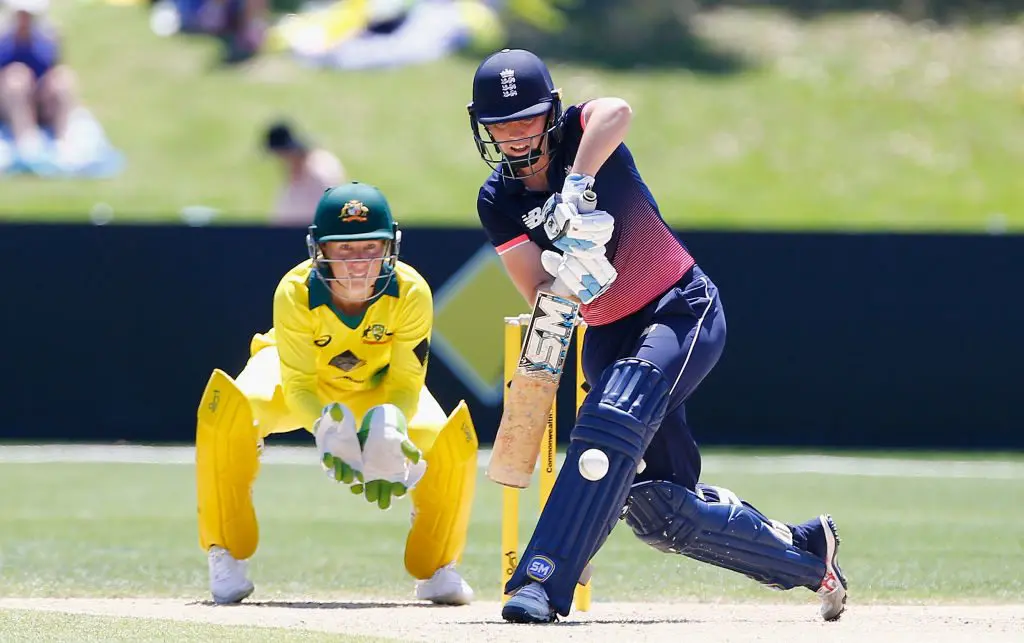
After the men's Test series ends in early January, there is still an appetite for international cricket amongst the Australian public. Most of summer remains and amateur cricketers are only half-way through their seasons.
Last season, that demand was met by the Women's Ashes Series.
The 2025 Women's Ashes covered the remainder of January, with the final game (a stand-alone Test match) ending early in February.
Ratings were up for the women's team, with a cumulative average audience of 4 million viewers across the series. This represented an 87 per cent increase on the 2021/22 Women's Ashes series.
This season, Australia will begin playing India in T20s on February 15 in Sydney. That will be followed by two more T20s and three ODIs before a day/night Test in Perth on March 9.
This does mean there is a month gap between the conclusion of the men's Ashes and the women's series against India.
The summer will also be interrupted by the men's 2026 T20 World Cup, which will begin mid-February.
It is questionable that Cricket Australia are waiting until mid-February to get the women's series underway at the same time the men will be competing for an ICC trophy.
That said, the women's home summer comes after the Women's World Cup in October 2025, meaning players will need rest. Furthermore, Australian broadcasting rights for ICC events sit with Amazon Prime. There will be no free-to-air competition between the men's and women's teams.
Hopefully the excitement generated by the Ashes will hold and translate to continued success for the women's team in their viewership and attendance numbers.
Negative: Men's White-Ball Cricket
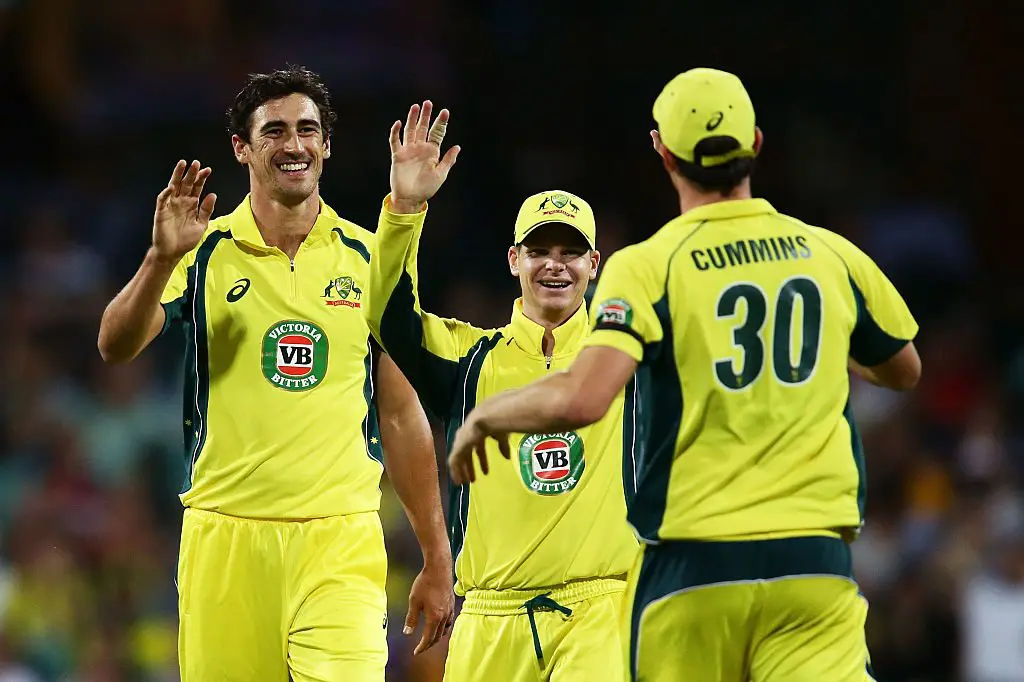
ODI cricket in particular is beginning to feel increasingly irrelevant the longer it stays off free-to-air television.
In the aforementioned media release touting the success of the 2024/25 season, Cricket Australia makes no mention of the men's white-ball game.
Moving white-ball games from January/February to October/November, before the Test matches, has hardly been well-received.
Infamously, a 2022 ODI between Australia and England only managed to attract 10,406 to the MCG.
Last season, attendances against Pakistan in November were more respectable. The three games in Melbourne, Adelaide and Perth drew crowds between 19,000 to 26,000.
T20 attendances were arguably more alarming. Again in November, matches in Brisbane and Hobart drew only 14,052 and 5,301 attendees, respectively. In fairness, these games were on weekdays and the T20 in Sydney, on a Saturday, attracted a respectable crowd of 31,563.
Cricket Australia's omission of viewership numbers for these series is telling, however.
Whilst this is anecdotal, it does not feel like the summer has truly begun until the red-ball is out. Test cricket, remaining on free-to-air, continues to capture the imagination and interest of the Australian public.
People still want to debate about who should be in the Test side. No one really discusses selection for ODIs in early November.
It is admirable players, selectors and management prioritise Test cricket. But when Pat Cummins is at Coldplay instead of playing for Australia, why should the rest of the country care about white-ball internationals?
Positive: The Big Bash
The lack of men's games after the Test series is a bonus for fans of the Big Bash.
It allows star players from the Test side, like Steve Smith, Marnus Labuschagne and Usman Khawaja, to feature in the BBL.
This season, it is hoped that there will be more opportunities for big-name Aussie players to play for longer in the BBL, potentially in the finals. This is dependent on a potential away series against Pakistan in the lead-up to the T20 World Cup.
Steve Smith has proven to be a massive drawcard for the Big Bash when he plays for the Sixers.
The "big three" quicks (Cummins, Hazlewood, Starc) are typically rested throughout the Big Bash window, but it would be exciting to see them return to the BBL if the window is slightly longer.
In 2024/25, Cummins was on Sydney Thunder's auxiliary list whilst Starc and Hazlewood were signed by the Sydney Sixers under the marquee supplementary player rule.
Speaking to ABC Sport, former Test cricketer Ed Cowan expressed the view that the Big Bash is now struggling to attract drawcard international players.
There is some weight to this analysis, years ago Kevin Pietersen, Andrew Flintoff, Dwayne Bravo and Brendon McCullum featured in the BBL. Now, there isn't really an international player of the same stature in the competition.
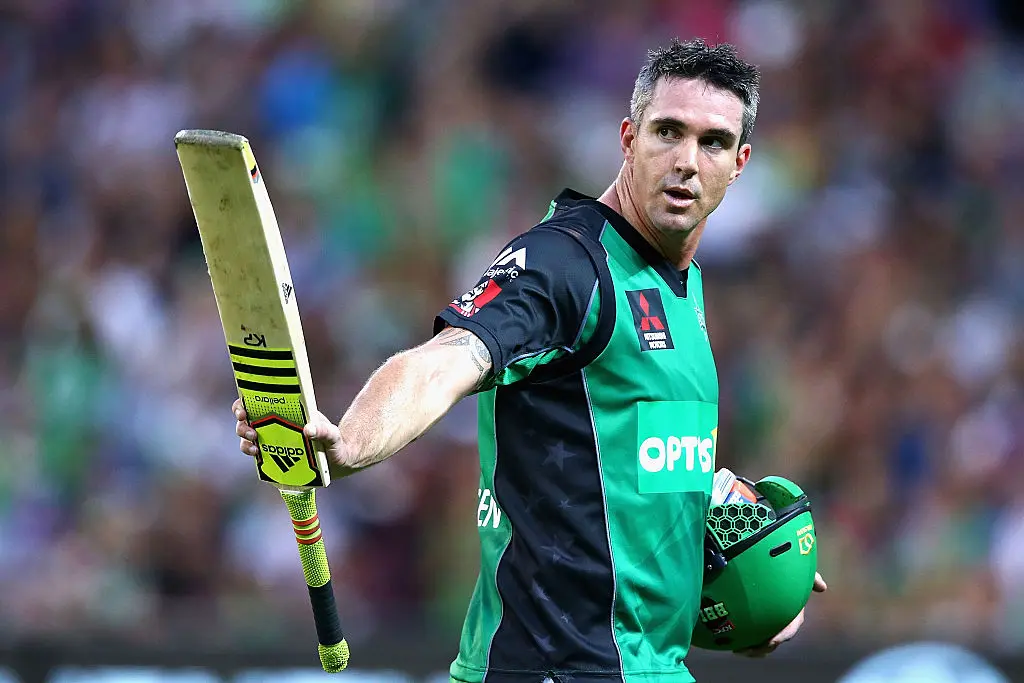
More players from the Australian Test squad could help alleviate the loss of this overseas talent.
Final words
Cricket Australia has a difficult task managing player workloads, multiple formats and balancing the need to promote both the men's and women's games. That's before you even think about getting big-name players into the BBL.
White-ball cricket has felt like a more understated opening to the summer compared to when it begun with the red-ball.
That said, keeping men's Test cricket exclusive to free-to-air has consolidated it's position as the most significant format of the game as the red-ball struggles against franchise cricket overseas.
Men's white-ball cricket probably drew more attention when it was scheduled in January, but moving it back to this time-slot could undermine the rise of the ever-growing women's game.
Home games in winter are unusual and smaller stadium capacities mean Darwin or Cairns will simply not be able to attract the same crowds the five mainland capitals can.
However, 8,000 in Darwin isn't far off Melbourne, at its worst, with 10,000 at an ODI in 2022. That's with Darwin's population of just under 140,000 compared to over 5 million people in Melbourne. Surely cricket fans up north deserve some games every now and then?
Australia will play another T20 in Darwin on August 12 before moving to Cairns to finish off the T20 series (August 16) and start the ODI series (August 19) against South Africa.